 |
 |
| << Back Poser >> |
| Heads of SHSs demand publication of disciplinary data to curb indiscipline |
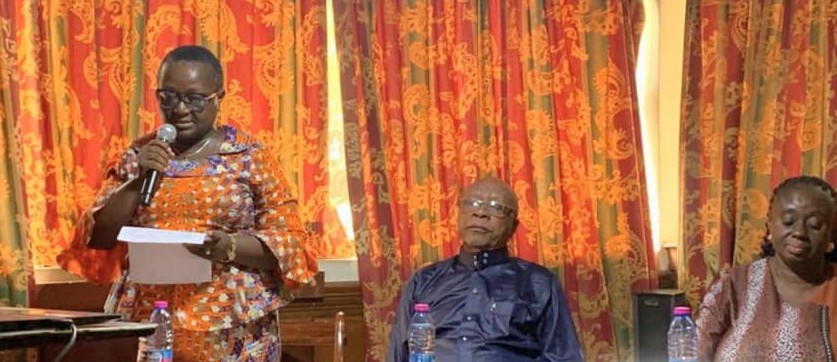 Heads of Senior High Schools (SHSs) in the Central Region have advocated for a systematic collection and publication of disciplinary data inter houses in schools and class to help schools spot patterns, target interventions and measure progress.
They explained that published figures would create constructive peer pressure among houses, enable focused support where it was needed and turn abstract discipline goals into concrete, trackable targets that house leaders could manage and be held to drive sustained behavioural change. They said using data to motivate house leaders in schools and encourage ownership of behaviour improvements, was vital because clear, unit-level statistics would make problems visible. Ultimately, regular publication of discipline trends would also help school management and stakeholders monitor the impact of interventions and reinforce accountability at the all levels, they stressed. The Heads’ statement was jointly read by Ms Linda Appiah, the Headmistress of the Holy Child School, Reverend Dr Patrick Appiah, Headmaster of St Augustine’s College and Mr John Arthur, the Headmaster of Edinaman SHS at a day’s workshop organised by the National Peace Council (NPC) in Cape Coast. Following recent surge in viral videos showing student sexting, bullying and violence, the School Heads believed the intervention would help schools prevent and handle bad behaviours. The forum was aimed at empowering the Heads of Schools to respond appropriately and timely in fostering peace in schools, nurture religious tolerance and particularly prevent violence, bullying and indiscipline. The workshop provided an opportunity for them to reflect on challenges facing schools, share best practices and develop practical strategies for fostering understanding and mutual respect. The Head of schools made other recommendations including a call for greater autonomy and resourcing of Guidance and Counselling Units in schools to foster a culture of respect, cooperation and a positive identity. It is also to build respectful student-to-student and student-to-teacher relationships to nurture a positive school culture that lowers violence and improves student wellbeing. Ultimately, it would reduce the drivers of school indiscipline including peer influence, access to weapons, overcrowding, inadequate facilities, unresolved school conflicts, sexual harassment and teachers’ conflicts of interest such as selling to students. They also made a strong case for involving parents directly in disciplinary processes, arguing that when parents were informed and expected to follow up at home, students’ accountability increased and repeated offences declined. Dr Juliette Dufie Otami, the Regional Director of Education, commended the NPC for promoting religious tolerance in schools, saying it was central to developing a peaceful, inclusive and value-based education system. She said education went beyond acquiring knowledge and skills to shaping character, instilling values, and preparing learners to be responsible citizens who respected the rights and beliefs of others. Dr Otami said Ghanaian schools continued to reflect the nation’s rich religious and cultural diversity and stressed the collective responsibility to ensure that diversity remained a source of strength rather than division. She assured that the Ghana Education Service remained committed to providing safe, inclusive and equitable learning environments where every learner and staff member was treated with dignity and respect, regardless of religious affiliation or cultural beliefs. “Promoting religious tolerance was not only an educational responsibility but also a national imperative contributing to social cohesion, peaceful coexistence and sustainable development. “I urge educators and leaders to model fairness, empathy, respect and tolerance so schools would be places where every child felt safe, valued and empowered to reach their potential,” she advised. Mrs Janet Dedei Sarney-Kuma, Director for Capacity Development and Outreach at NPC said the 1992 Constitution granted freedom of worship and therefore students whether Christian or Muslim, needed to tolerate one another, since they were not enemies but followers of different religious systems. She added that whether a school was Muslim or Christian, students of the other faith should be made to feel included rather than excluded. She encouraged unity among students, teachers, non-teaching staff and parents, noting that outside influences sometimes provoked tensions and that parental involvement reduced those pressures. Source: GNA |
| Ghana Business News |
|
Nigeria targets green industrialisation with critical minerals roadmap By Yinka Kolawole Nigeria is positioning its vast critical mineral deposits as the foundation for a new wave of industrial growth, following the unveiling of a strategic roadmap designed to convert the country’s mineral wealth into investments in clean energy manufacturing and domestic value addition. The roadmap, presented by the Council for Critical Minerals Development in […] |
|
EVs: Afreximbank wants Nigeria, other African countries to stop exporting Lithium By Emma Ujah President and Chairman of the Board of the African Export-Import Bank (Afreximbank), Dr. George Elombi, has tasked African nations to stop the export of Lithium, the main raw material used in the production of electric vehicle (EV) batteries. Nigeria is a major exporter of Lithium in Africa, though most of the quantity is […] |
|
Trade between Ghana and Canada rises 56% to $752m in 2025 Bilateral merchandise and services trade between Ghana and Canada expanded by 56 per cent year-on-year to $752 million in 2025, signalling a structural shift from aid-based engagement to a more trade and investment-led partnership. |
|
FG omitted N8.8trn spending worth 2% of GDP from recent budgets — IMF By Yinka Kolawole, with agency report The International Monetary Fund (IMF) has disclosed that the Federal Government (FG) failed to capture public expenditure equivalent to about two per cent of Nigeria’s Gross Domestic Product (GDP) in recent national budgets, creating a mismatch between the country’s reported fiscal deficit and its actual financing needs. IMF’s Resident Representative […] |
|
NSC protects N90.6bn, $1.348m for Nigerian shippers By Efe Onodjae The Executive Secretary and Chief Executive Officer of the Nigerian Shippers’ Council (NSC), Dr. Akutah Pius, says the Council protects over N90.60 billion and $1.348 million in economic value for Nigerian shippers through regulatory interventions and dispute resolution. Speaking through a representative at a media engagement with maritime editors and reporters in Lagos, […] |
|
FG increases domestic borrowing by 241% By Elizabeth Adegbesan As part of the Federal Government (FG) borrowing plan for the 2026 budget, the Central Bank of Nigeria, CBN, has issued Treasury Bills, TBs, to raise N5.8 trillion in the third quarter of 2026 (Q3’26). This represents a 241 percent year-on-year (YoY) increase when compared to N1.76 trillion sold in Q3’25. CBN disclosed […] |