 |
 |
| << Back Poser >> |
| Death awareness: Why Ghana must embrace end-of-life care |
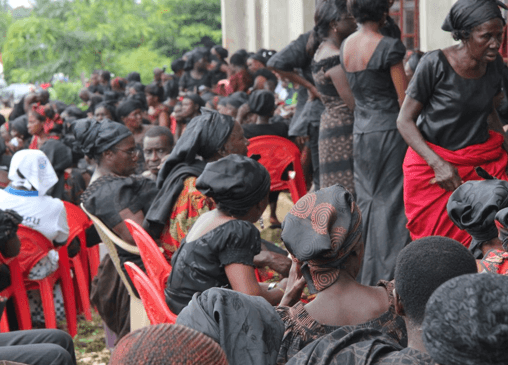 Ghanaians prepare extensively for birth through labour, rituals, family support, and community celebrations. Yet, when it comes to death—the final transition of life—many people deny, resist, or medicalise the process until dignity is lost.
In Ghana, death is often treated as a medical emergency rather than a natural stage of life. The story of Mr George Owusu Asomaning, an 81-year-old whose final days highlighted both the value of death awareness and the shortcomings of the healthcare system, offers important lessons for the nation. Mr Asomaning’s journey A deeply spiritual man, Mr Asomaning had long embraced the reality of mortality. He spoke openly about death and consciously prepared himself and his family for the inevitable. After surviving a mild stroke, he lived for more than a year with gratitude and contentment despite physical limitations. As his conversations increasingly focused on gratitude, reflection and closure, his family recognised that he was entering the final chapter of his life. When he later experienced what doctors described as a seizure, he was rushed to hospital. What followed was a series of medical interventions, including a coma, episodes of delirium, oxygen support and the administration of powerful medications. According to his children- all grown-ups, communication from the medical team was often inconsistent, making it difficult to understand his condition and whether continued treatment remained appropriate. At one point, a strong anti-convulsant medication was prescribed as part of his treatment regimen. Understanding that he was approaching the end of life, his children requested that he should not be intubated should the need arise. As the family sought clarification about his care, they encountered what they described as hostility from some healthcare personnel. In one instance, a doctor reportedly responded harshly to their concerns, deepening their distress during an already difficult period. Despite these challenges, Mr Asomaning was eventually taken off oxygen support. By then, his body had begun gradually shutting down. He developed difficulty swallowing and survived primarily on small sips of water and coconut juice. The family began searching for hospice care services but found that such services were difficult to access and rarely discussed openly in Ghana, where death remains a largely taboo subject. Mr Asomaning eventually died peacefully at home, surrounded by loved ones. His passing reflected the death awareness he had embraced throughout his life and allowed him to leave with dignity and peace. His family’s experience, however, underscored a broader concern: Ghana’s healthcare system remains inadequately prepared to support patients and families through the end-of-life journey. Birth and death as natural labours Society prepares extensively for birth. Families, healthcare providers and communities support the arrival of new life. Death, too, can be understood as a form of labour—a gradual transition from life that deserves similar preparation, care and respect. Rather than viewing death solely as a medical failure, it should be recognised as a natural part of the human experience. Acknowledging this reality allows individuals and families to approach the final stage of life with greater understanding and dignity. The case for hospice and end-of-life care Hospice care focuses on comfort, dignity and emotional support rather than aggressive interventions when recovery is no longer possible. Ghana urgently needs to strengthen and expand hospice and palliative care services within the health system. The World Health Organization recognises palliative care as an essential component of Universal Health Coverage. Such care is not limited to cancer patients but is intended for anyone living with a serious illness or approaching the end of life. End-of-life care is not about giving up on patients. Rather, it involves recognising when curative treatment is no longer effective and ensuring that pain is managed, personal wishes are respected and families receive the support they need. Effective palliative care can also reduce unnecessary hospital admissions, ease pressure on healthcare facilities and allow individuals to spend their final days in an environment of their choice. Families should not have to struggle against interventions that may no longer serve the best interests of a loved one nearing the end of life. While most healthcare professionals enter the profession with a commitment to save lives and serve compassionately, many receive limited training in end-of-life care and communication. There is therefore a need for enhanced training to help medical professionals recognise when care should transition from curative treatment to palliative support. The role of death doulas Death doulas are non-medical companions who provide emotional, practical and spiritual support to individuals and families during the dying process. They do not replace doctors or nurses. Instead, they complement medical care by helping families navigate one of life’s most challenging transitions. Their presence can help normalise conversations about death, reduce fear and create meaningful experiences that honour life and legacy. Introducing and promoting this practice in Ghana could help make the experience of dying less clinical and more humane. Death is part of life Death remains one of humanity’s greatest teachers. It reminds people that life is finite, that compassion is essential and that dignity should be preserved until the very end. Ghana must seriously consider integrating hospice and palliative care into mainstream healthcare delivery. Healthcare professionals should be supported with the knowledge and skills needed to discuss death sensitively and guide families through difficult decisions. Communities must also be encouraged to engage in open conversations about mortality and end-of-life planning. If society prepares carefully to welcome life into the world, it should prepare with equal compassion to accompany people through their final journey. Death is not the opposite of life; it is part of life itself. The true measure of a healthcare system lies not only in its ability to save lives but also in how respectfully and compassionately it supports people through life’s final chapter. By Hannah Awadzi Source: GNA |
| Ghana Business News |
|
Nigeria targets green industrialisation with critical minerals roadmap By Yinka Kolawole Nigeria is positioning its vast critical mineral deposits as the foundation for a new wave of industrial growth, following the unveiling of a strategic roadmap designed to convert the country’s mineral wealth into investments in clean energy manufacturing and domestic value addition. The roadmap, presented by the Council for Critical Minerals Development in […] |
|
EVs: Afreximbank wants Nigeria, other African countries to stop exporting Lithium By Emma Ujah President and Chairman of the Board of the African Export-Import Bank (Afreximbank), Dr. George Elombi, has tasked African nations to stop the export of Lithium, the main raw material used in the production of electric vehicle (EV) batteries. Nigeria is a major exporter of Lithium in Africa, though most of the quantity is […] |
|
Trade between Ghana and Canada rises 56% to $752m in 2025 Bilateral merchandise and services trade between Ghana and Canada expanded by 56 per cent year-on-year to $752 million in 2025, signalling a structural shift from aid-based engagement to a more trade and investment-led partnership. |
|
FG omitted N8.8trn spending worth 2% of GDP from recent budgets — IMF By Yinka Kolawole, with agency report The International Monetary Fund (IMF) has disclosed that the Federal Government (FG) failed to capture public expenditure equivalent to about two per cent of Nigeria’s Gross Domestic Product (GDP) in recent national budgets, creating a mismatch between the country’s reported fiscal deficit and its actual financing needs. IMF’s Resident Representative […] |
|
NSC protects N90.6bn, $1.348m for Nigerian shippers By Efe Onodjae The Executive Secretary and Chief Executive Officer of the Nigerian Shippers’ Council (NSC), Dr. Akutah Pius, says the Council protects over N90.60 billion and $1.348 million in economic value for Nigerian shippers through regulatory interventions and dispute resolution. Speaking through a representative at a media engagement with maritime editors and reporters in Lagos, […] |
|
FG increases domestic borrowing by 241% By Elizabeth Adegbesan As part of the Federal Government (FG) borrowing plan for the 2026 budget, the Central Bank of Nigeria, CBN, has issued Treasury Bills, TBs, to raise N5.8 trillion in the third quarter of 2026 (Q3’26). This represents a 241 percent year-on-year (YoY) increase when compared to N1.76 trillion sold in Q3’25. CBN disclosed […] |